
Although it may seem like a relic of the past, asbestos remains one of the most common environmental dangers in older buildings. Proper asbestos testing, abatement, and consulting helps property owners identify potential risks, comply with environmental regulations, and protect the health of occupants and workers.
Asbestos Services Covered on This Page
- Asbestos Consulting for Schools
- Asbestos Consulting for the Workplace
- What Is Asbestos
- Testing and Sampling
- Abatement
- FAQs
Consulting for Schools
Almost half of schools in the U.S. were constructed between 1950 and 1969, when asbestos materials were highly prevalent in construction.
The EPA’s Asbestos Hazard Emergency Response Act (AHERA) requires that accredited inspectors re-inspect school buildings at least once every three years to reassess the condition of asbestos-containing materials. The inspection notes the current condition of the asbestos materials. This allows for the determination of the relative degree of damage and likelihood of future fiber release.
Routine surveillance checks must also be conducted every six months to monitor the condition of the asbestos materials. As long as asbestos building materials remain in good condition, the EPA states that they pose minimal health risks and recommends that schools leave them in place.
Schools are also required to develop and maintain Asbestos Management Plans, a copy of which must be kept at each school. The plans are required to document several factors including:
- the location of asbestos within the school
- date of inspection
- plans for re-inspections
- recommended asbestos response actions
- contact information for designated persons
- And any action taken to repair or remove ACM
The EPA requires all inspections and response actions be carried out by certified professionals, and that all custodial staff attend asbestos awareness training. Our team of asbestos professionals have years of experience performing AHERA services and asbestos services for schools throughout Pennsylvania and New Jersey.
Consulting for the Workplace
Asbestos Operations and Maintenance (O&M) Programs
O&M programs are required for facilities to plan how to manage their asbestos. Programs include details on training, cleaning, work practices, and surveillance to ensure that asbestos-containing materials remain in good condition. A well-developed program will include information on how to maintain ACM in good condition, ensure the proper cleanup of small releases of asbestos fibers, prevention for the further release of fibers, and monitoring of the condition of the materials.
Schedule with Our Team
Asbestos hazards often remain hidden inside older building materials. Without proper inspection and testing, property owners may unknowingly release harmful airborne fibers. In order to protect workers, building occupants, and the public, you need a team that understands regulations and provides secure and efficient handling.
Our asbestos team consists of experienced abatement supervisors and workers who are fully licensed for asbestos abatement activities of all sizes. Learn more about our licensed asbestos abatement services.
Our Qualifications:
- AHERA 3-Year Re-Inspection
- AHERA 6-Month Surveillance
- Operations and Maintenance (O&M) Programs
- Asbestos Management Plans
- OSHA Personal Monitoring
- Asbestos Inspections and Surveys
- Air, Soil, and Bulk Sampling
- Abatement and Bidding Specifications
- Project Management/Development
- Project Compliance Monitoring
- Asbestos Clearance Sampling
- Asbestos Awareness Training
- Asbestos Worker Training
Our team of professionals is ready to provide you with the best possible service, conducted in accordance with Federal, State, and Local Regulations. If you suspect asbestos is present at your property, contact us for consultation today.
What Is Asbestos and Why Is It Dangerous?
Asbestos is a material widely used by builders and manufacturing throughout the 20th century. It was cost-effective, durable, fire-resistant, and an effective insulator. However, when these microscopic fibers become airborne during renovations, demolition, or deterioration of building components, they get into the lungs very easily. Research revealed that inhaling asbestos fibers causes serious health conditions.
The EPA defines an asbestos-containing material (ACM) as a material that contains more than one percent of asbestos fibers. All ACMs should be carefully regulated and handled by professionals to reduce the risk of health issues.
Asbestos-Containing Materials Include:
- Surfacing material such as plaster, spray-on fireproofing, or structural members
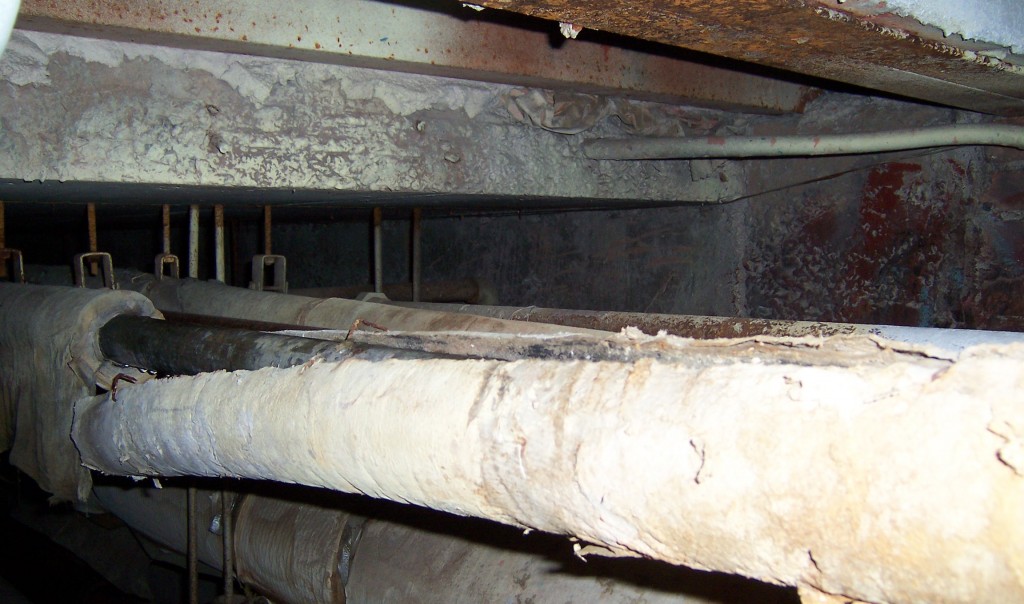
- Thermal system insulation added to pipes, fittings, boilers, ducts, and other components that reduce heat loss
- Joint compounds
- Floor tiles
- Roofing materials
- Mastics
- And much more
Professional Asbestos Testing & Sampling
Asbestos testing identifies whether building materials contain asbestos fibers. This is typically done through a survey, where environmental specialists examine your property and collect samples.
Samples are carefully collected and sent to labs where they are tested for the presence of asbestos.
How Asbestos Testing Works
A professional asbestos inspection generally includes:
- A site inspection
A professional evaluates your property and identifies suspected materials. - Sampling materials
Samples are collected from building materials while taking safety precautions. - Laboratory analysis
Accredited labs determine whether asbestos fibers are present. - Survey report and recommendations
The property owner receives documentation outlining where asbestos exists and how it should be managed.
Asbestos testing is often required before renovation or demolition projects because disturbing asbestos-containing materials would release the hazardous fibers into the air.
Types of Asbestos Sampling
While asbestos is most often found in building materials, it can also be found in the air and soil. 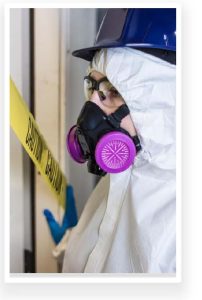
Air sampling for asbestos fibers requires the use of calibrated high-volume pumps fitted with specialized filter cassettes. Air sampling can be done to ensure that asbestos fibers are not being released to areas outside the designated work zone. Then, following the completion of asbestos abatement, it ensures the area is clean and safe to reoccupy.
If you have any reason to suspect that previous activity in the area could have involved asbestos, it is important to get a professional and reliable sampling done. Asbestos in the soil can still pose health risks, so proper testing is essential to ensure your site is safe.
Contact our team for more information about types of testing you need.
Why Property Owners Should Get Asbestos Testing
Asbestos has been recognized as a major health hazard for decades. Although it is no longer used in most construction materials, many older schools, offices, churches, homes, and industrial buildings still contain asbestos today.
It is far better to get asbestos testing and follow guidelines to significantly minimize your liability and risk.
Licensed Asbestos Abatement
Have you already started construction, or know you have asbestos that needs to be removed? Asbestos abatement is the controlled process of removing, repairing, or securing asbestos-containing materials in a building.
The goal of abatement is to prevent asbestos fibers from becoming airborne and entering the breathing space of occupants or workers. If your property may have asbestos-containing materials and you plan on construction, renovation, or demolition, you need a licensed abatement firm to first abate the asbestos in accordance with Federal (NESHAP/AHERA), State, and Local Regulations.
Abatement may include:
- Removing asbestos-containing materials
- Encapsulating materials with protective coatings
- Enclosing asbestos behind barriers
- Safe disposal of contaminated materials
These processes must follow strict environmental and safety regulations.
Why Perform Asbestos Abatement?
Because asbestos exposure is extremely dangerous, controlling and managing asbestos is critical for protecting property owners, construction workers, and building occupants. A professional asbestos project designer can help ensure that all regulations are followed and your project completion dates are met.
Why Testing and Abatement Are Important
1. Protecting Health
There is no completely safe level of asbestos exposure, and even brief exposure can contribute to long-term health risks. Any improperly handled asbestos is a chance at someone getting mesothelioma or lung cancer.
2. Follow Legal Regulations
Federal and state regulations often require asbestos inspections before demolition or renovation work begins. On top of other benefits, it is best if you follow guidelines and policy to avoid complications in the future.
3. Preventing Environmental Contamination
Professional abatement ensures hazardous materials are removed and disposed of safely instead of ending up somewhere they can cause harm.
4. Supporting Safe Construction Projects
Contractors and developers rely on asbestos surveys to avoid unexpected delays and costly project interruptions. Unexpectedly discovering asbestos after starting a project could set your timeline back weeks or months.
5. Protecting Property Value
Proper asbestos management protects both current building owners and future occupants from potential liability and health hazards.
Asbestos FAQs
How do I know if my building contains asbestos?
The only reliable way to determine whether materials contain asbestos is through asbestos testing. Asbestos was used in many materials and isn’t necessarily identifiable by looking at it.
Is asbestos always dangerous?
Yes, however if you have found undisturbed asbestos you might not have been exposed to the dangerous fibers yet. Stop further construction or remodeling and contact a professional to perform testing as soon as possible. Any disturbed or deteriorated asbestos is a health hazard, so practice caution.
Who can perform asbestos inspections?
Inspections must be conducted by trained and accredited asbestos professionals who follow federal and state environmental regulations.
Can asbestos be removed safely?
Yes. Licensed asbestos abatement professionals use specialized containment and equipment to safely dispose of the asbestos.
Do all renovation projects require asbestos surveys?
Many renovation and demolition projects require asbestos surveys to identify hazardous materials before construction begins.