
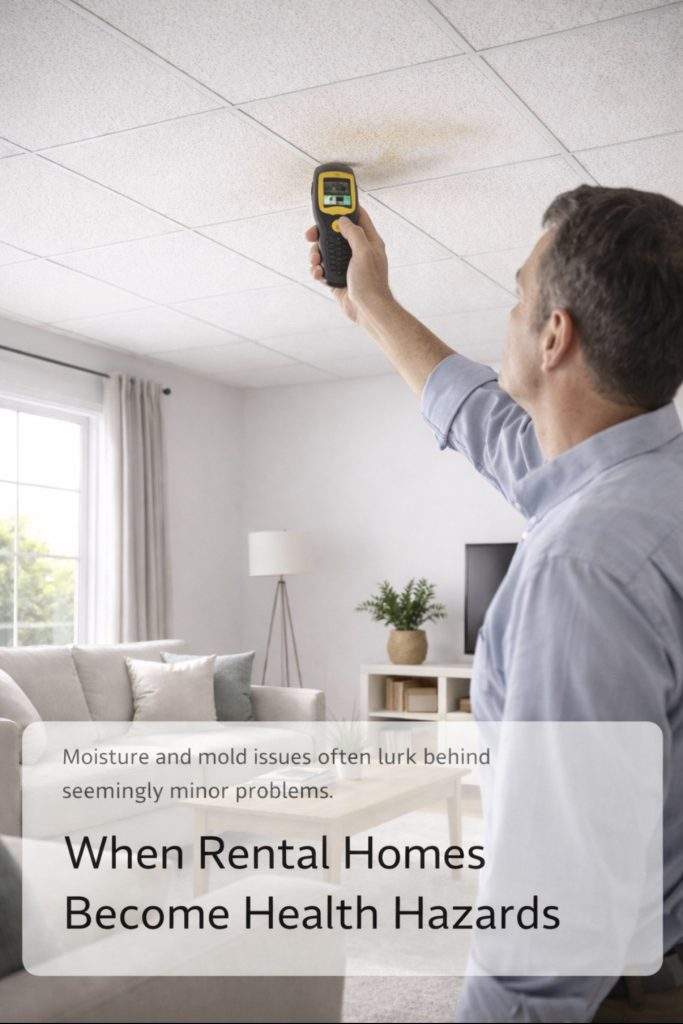
Renting a home comes with expectations on both sides, but when environmental or health hazards arise, responsibility often becomes a point of conflict. Many tenants assume landlords must fix every issue, while landlords sometimes attempt to shift blame or responsibility to occupants. In reality, responsibility depends on the source of the condition, though the law generally prioritizes maintaining safe living conditions.
In most situations, landlords are responsible for hazards tied to the condition of the building itself, particularly issues that existed before the tenant moved in or resulted from structural or maintenance failures. Common examples include lead-based paint hazards in older homes, asbestos-containing materials, chronic moisture problems, mold caused by leaks or ventilation deficiencies, and unsafe renovation practices that disturb hazardous materials.
Problems arise when landlords argue that tenants caused or worsened the issue. Tenants can become responsible when hazards result from behavior or neglect, such as failing to report leaks, creating excess moisture through poor ventilation, causing damage, or making unauthorized alterations. In these cases, responsibility may shift because the condition developed after occupancy due to tenant actions.
Most disputes occur in gray areas. For example, mold that develops after a leak goes unreported, or water intrusion blamed on tenant lifestyle rather than building defects. Housing authorities and courts typically examine whether the landlord maintained the property properly and whether the home met basic habitability standards.
The practical reality is that property owners usually cannot contract away their obligation to provide safe living conditions, regardless of lease wording. While tenants have a responsibility to reasonably care for the property, landlords remain responsible for structural conditions and environmental hazards tied to the building itself.
For both landlords and tenants, the best protection is proactive communication and early evaluation of potential hazards before conditions worsen into disputes or costly remediation.
When responsibility is unclear, identifying the source of a condition is often the most reliable way to protect health and avoid disputes.