
Mold problems are common in Pennsylvania and New Jersey due to humidity, basement moisture, storm damage, and seasonal temperature changes. While mold is sometimes visible on walls or ceilings, it often grows behind drywall, under flooring, inside HVAC systems, or in damp crawl spaces long before it can be seen.
Karl Environmental Offers the Following Mold Services:

- Mold Sampling (or Mold Testing) – This determines whether there is a mold presence and what type of molds are growing.
- Mold Inspections – We locate the source of the mold and where in the building it has spread.
- Moisture Inspections – Mold almost always forms in the presence of moisture, so locating places of moisture in a building can lead to discovering or preventing mold.
- Mold Remediation – This includes both regular maintenance against small batches of mold and large-scale removal. This should be done by professionals to reduce the spread and harm to people.
- Infrared (IR) Camera Investigations – Some types of mold can be discovered via an IR camera.
If you suspect mold, early evaluation protects your indoor air quality, property value, and long term health. Contact our team today to get an evaluation.
What is Mold Testing?

Mold testing is the process of identifying the presence, type, and concentration of mold spores in a building using scientific air and surface sampling methods analyzed by an accredited laboratory.
Mold testing confirms whether mold is present and determines whether indoor spore levels are elevated compared to normal outdoor conditions. Testing is especially important after your home suffers from water damage, when buying or selling real estate, or when you suffer from an unexplained respiratory irritation.
How Does Mold Testing Work?
Step 1. Air Sampling
The team collects air samples using specialized pumps and filters that capture airborne mold spores. Specimens are then sent to an accredited lab for analysis.
We then compare those indoor samples to outdoor samples. Indoor counts that are higher than outdoor counts can indicate hidden mold growth
Step 2. Surface Sampling
If visible mold is present, we may use tape lifts or swabs to identify the species. This helps determine potential health concerns and guides remediation planning.
Why Mold Testing is Important
Accurate mold testing locates hidden problems and gives professionals a place to start fixing the issue. Additionally, tests provide documentation that protects property owners, buyers, and tenants alike.
Moisture & Mold Inspection
Mold inspection identifies the source of moisture that allows the mold to grow. It also determines how far contamination may have spread within a building. Mold needs moisture to grow, so eliminating sources of that moisture is key to preventing mold from returning.
During mold inspection, our team assesses areas prone to water intrusion, including:
- basements
- crawl spaces
- attics
- areas near sinks or showers
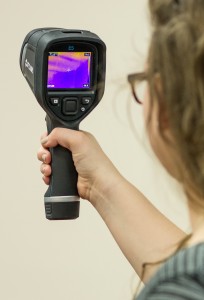 Karl Environmental Group uses professional tools to locate moisture and mold. Tools like moisture meters and thermal imaging cameras allow our team to detect hidden dampness without unnecessary demolition. We also use infrared (IR) cameras to reveal temperature differences that indicate concealed moisture conditions contributing to mold growth.
The weather conditions in Reading, Lancaster, Philadelphia PA and across NJ often lead to ice or water damage over time that allows moisture to sneak into your home. A thorough inspection ensures that remediation addresses both the mold contamination and the moisture feeding it.
What Is Mold Remediation?
Mold remediation is the process of safely removing mold from a property and restoring the affected area. Proper remediation follows strict containment and safety protocols that protects people from further harm.
How Does Mold Remediation Work?
Step 1: Containment
We start by isolating the affected area. To do this, our team sets up barriers and negative air pressure that prevents mold spores from spreading through the building.
Step 2: Air Filtration
Our team sets up HEPA filtration equipment that operates continuously to capture airborne particles during the cleaning process.
Step 3: Removing Contaminated Materials
Some porous materials like drywall, insulation, or carpeting might be heavily contaminated. They need to be removed and disposed of properly to keep the mold from reestablishing itself after cleanup.
Step 4: Cleaning
Non-porous and semi-porous materials are cleaned using industry-approved methods and antimicrobial treatments.
Step 5: Clearance Testing
After remediation is complete, clearance testing may be performed to confirm that indoor spore levels have returned to acceptable ranges.
Why is Professional Mold Remediation Important?
Professional remediation protects occupants of the building. In the case of improper remediation, mold may grow back or spread to new areas of the building, lowering air quality and leading to further repair costs.
Need Mold Testing, Inspection, or Remediation in Southeast PA?
 Whether you are concerned about indoor air quality, preparing to sell a property, or responding to water damage… our team is here to help across Lancaster, Reading, Philadelphia PA and Northern NJ. Our quotations are always free!
Contact Karl Environmental Group today to schedule a professional mold inspection or testing service. Early action protects your health, your property, and your peace of mind.
Visit the EPA’s Mold website for more information on mold and your home.
The CDC provides more information on mold and dampness in buildings.