
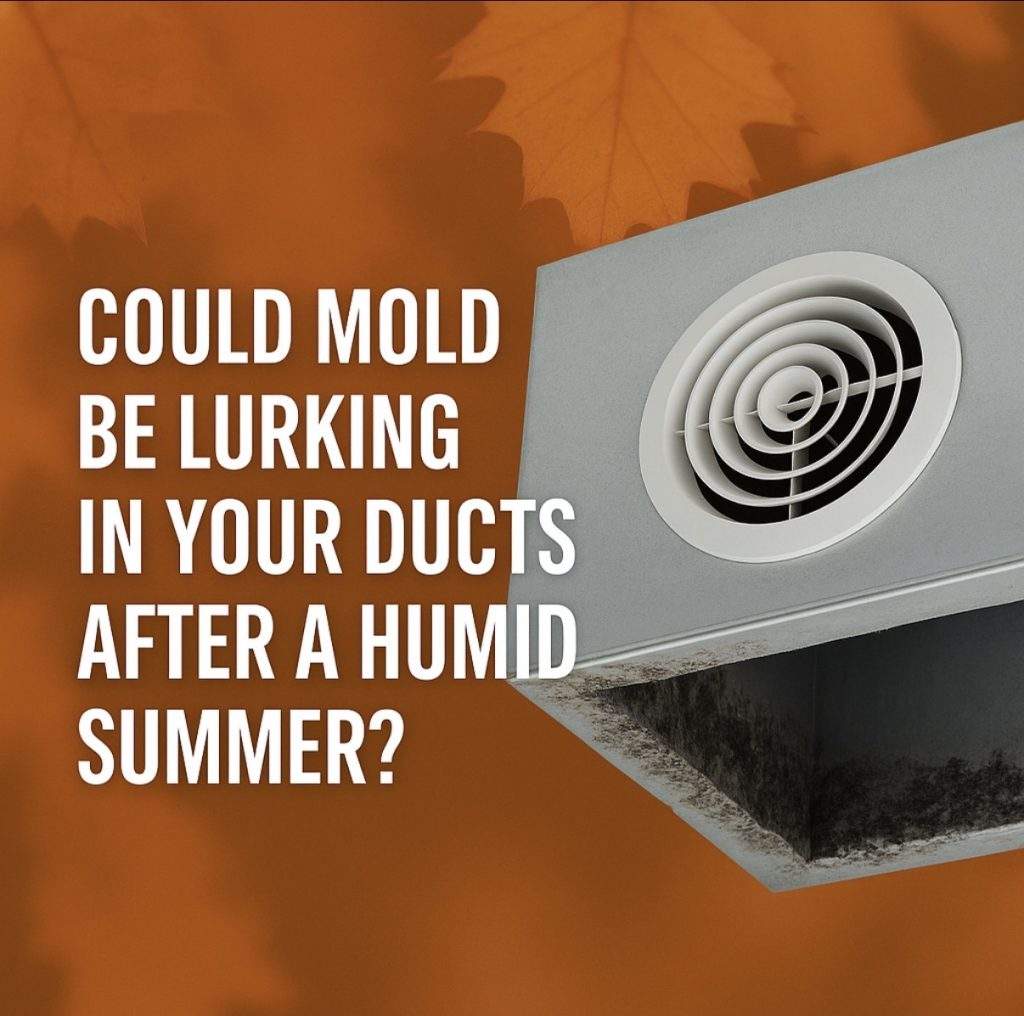
As summer fades into fall, many homeowners and building managers shift their focus from cooling to heating — but few stop to think about what’s been brewing inside their HVAC system all summer long. High humidity, condensation, and trapped dust create ideal conditions for mold growth inside air ducts, coils, and drip pans. When temperatures drop and systems switch to heat, those spores can circulate through every room in your home or building.
Why do Humid Summers Create Mold?
Even well-maintained HVAC systems experience condensation as warm, moist air passes over cool coils. Over time, that moisture can collect inside ducts, especially if:
- Drain pans aren’t draining properly
- Filters are clogged and restricting airflow
- Ducts have small leaks or insulation gaps
- Systems cycle on and off frequently in humid weather
These damp, dark spaces become breeding grounds for mold, mildew, and bacteria — often unnoticed until the air turns musty or allergy symptoms spike.
What are the Warning Signs that Mold May Be Growing in Your Ducts?
Mold in HVAC systems isn’t always visible, but these signs should raise a red flag:
- Persistent musty odors when the system turns on
- Increased allergy or asthma symptoms among occupants
- Visible mold or dark streaks near vents or drip pans
- Condensation on vents or grills
- Dust buildup with black or greenish tint
If you notice one or more of these, it’s worth scheduling a professional duct inspection before you start using your heating system regularly.
For schools, offices, and healthcare facilities, mold in ducts can also contribute to sick building syndrome, reducing productivity and increasing absenteeism.
Why is Fall Is the Best Time for an Indoor Air Quality Inspection?
Fall offers mild temperatures and lower humidity, making it an ideal time to:
- Inspect and ensure ducts are clean before the heating season
- Seal and insulate ducts to prevent condensation during temperature swing
- Check coils, drip pans, and drain lines for mold or biofilm buildup
- Replace air filters and consider upgrading to higher HEPA-rated model
- Test to identify hidden mold and microbial spores
Preventive maintenance now can help you avoid mid-winter air quality complaints, musty odors, and even costly mold remediation later.
What Simple Steps You Can Take Now?
- Replace your HVAC filters, especially if they’ve been in use all summer.
- Check for water leaks or condensation around air handlers and duct joints.
- Keep humidity below 60% indoors and consider using a dehumidifier if needed.
- Schedule a professional air duct inspection or IAQ test before switching to heat.
Clean ducts and balanced humidity not only reduce mold risk but also improve energy efficiency and system lifespan.
Final Thoughts
As crisp fall air arrives, your HVAC system should be circulating fresh, clean air, not lingering humidity or mold spores from the summer. A simple inspection this season can make all the difference for your health, comfort, and long-term HVAC performance.
Karl Environmental Group specializes in indoor air quality assessments, mold inspections, and environmental testing for homes, schools, and commercial buildings. Using advanced sampling and moisture detection equipment, our team identifies whether mold is present and determines what’s causing it so you can breath easier all year long.
Share this article:


