
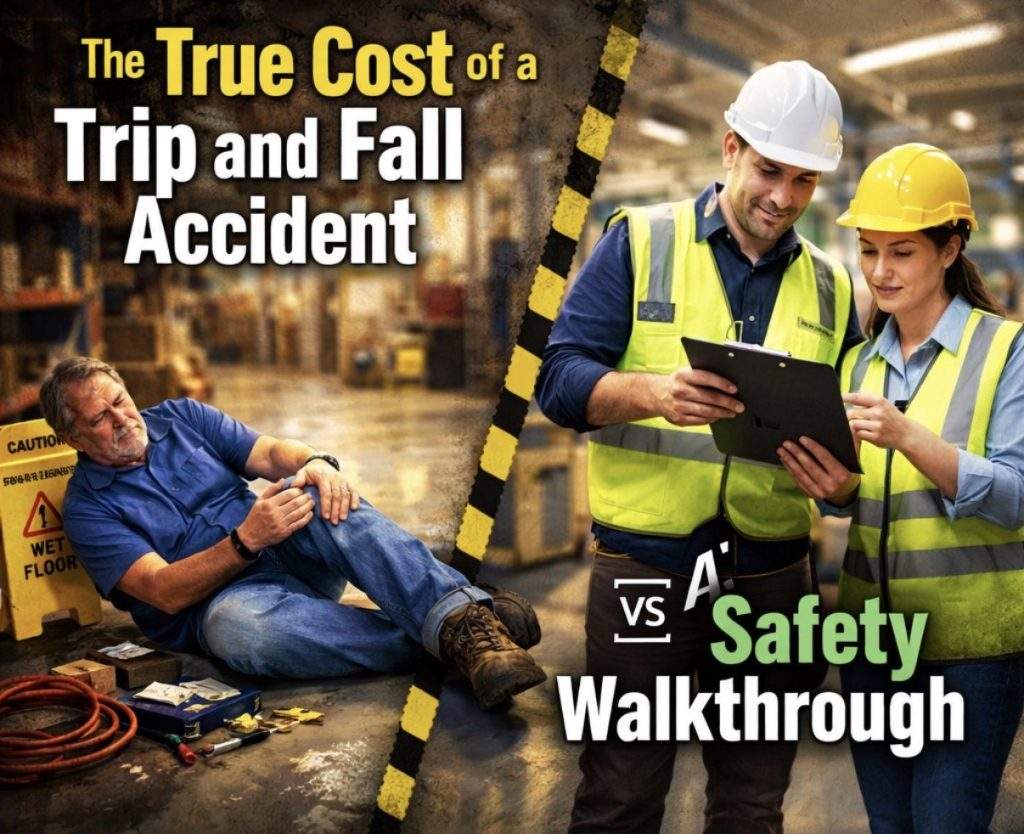
After decades of evaluating workplaces and responding to injury investigations, one reality is consistent: trip and fall accidents are rarely “freak” incidents. In most cases, the contributing conditions were present long before the injury occurred. The hazard itself does not change; what follows are the full financial and regulatory costs, including potential citations, attached to it.
From a regulatory and financial standpoint, trip and fall incidents are among the most expensive safety failures an organization can experience. Medical treatment is only the beginning. Workers’ compensation claims, lost productivity, employee downtime, and operational disruptions follow quickly. Overtime labor, temporary staffing, increased insurance premiums, and administrative time spent managing claims often far exceed the cost of the initial injury.
Slip, trip, and fall hazards remain one of the most frequently cited contributors to serious workplace injuries. OSHA’s Safety Pays Program demonstrates how these incidents generate both direct and indirect costs that many organizations underestimate. While medical expenses are visible, indirect costs including claim management, training replacement employees, supervisory time, and long-term insurance impacts, often represent the largest financial burden.
Once a trip and fall accident occurs, control shifts away from the organization. Incident investigations, documentation requirements, claims processing, legal involvement, and potential regulatory scrutiny become unavoidable. Management attention is diverted, operations are disrupted, and financial exposure becomes unpredictable. In many cases, the post-incident response costs more than years of proactive safety efforts would have.
A professional safety walkthrough addresses these risks before an injury occurs, for a fraction of the cost associated with a single trip and fall incident. From an inspector’s perspective, experienced third party safety professionals provide an objective view that organizations cannot achieve internally. Effective walkthroughs focus on identifying conditions that commonly lead to trip and fall incidents, conditions that are often overlooked during normal operations. Addressing these issues proactively reduces exposure, demonstrates due diligence, and supports compliance with recognized safety expectations.
When costs are compared objectively, the difference is clear. The controlled and predictable expense of a safety walkthrough is minimal when weighed against the escalating financial, legal, and operational consequences of a trip and fall accident.
The true cost of a trip and fall accident extends far beyond the moment of injury. From a regulatory and risk-management perspective, investing in proactive safety measures is not optional, it is a practical, cost-effective decision that protects operations, finances, and long-term stability.
At Karl Environmental, safety walkthroughs are approached with the same regulatory mindset used during OSHA inspections, and our background in environmental and safety assessments allows us to identify hazards that are not easily recognized before they become costly, reportable incidents. Prevention preserves control, limits liability, and protects both people and the organization. From an OSHA compliance perspective, proactive hazard identification remains one of the most defensible and cost-effective risk-control measures available to employers.