
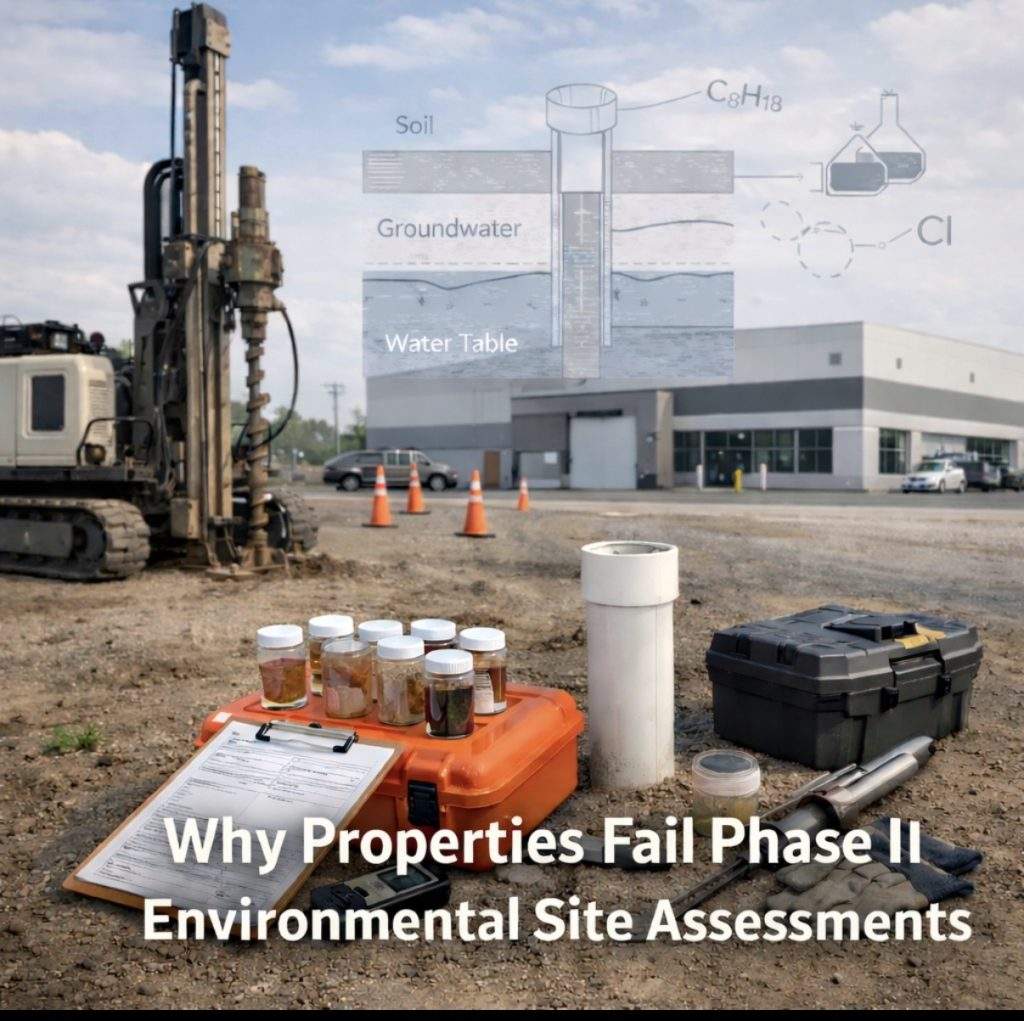
And Why It’s Usually Not the Disaster Buyers Expect
When a property proceeds to a Phase II Environmental Site Assessment (ESA), many buyers fear the worst – abandoned chemical dumps, massive cleanup costs, or a deal that collapses overnight.
In reality, most properties that “fail” a Phase II do so for one very specific and surprisingly common reason. In practice, this is something we see regularly on otherwise routine real estate transactions.
THE MOST COMMON REASON PROPERTIES FAIL A PHASE II ESA
Confirmed subsurface contamination exceeding regulatory standards.
Most often, this contamination is petroleum-related, not hazardous chemical waste.
Once sampling confirms that soil or groundwater impacts exceed state cleanup criteria, the site is considered environmentally impaired, even if the contamination is historic, stable, or low-level.
WHY PETROLEUM CONTAMINATION IS THE MOST COMMON CULPRIT
The single most frequent source of Phase II failures is underground storage tanks (USTs) or former fuel systems, including:
- Old heating oil tanks
- Former gas stations or service bays
- Tanks removed decades ago without proper closure documentation
- Small historic leaks never addressed under today’s standards
Many of these releases occurred long before current environmental regulations existed. What was once considered acceptable simply doesn’t meet today’s compliance requirements.
OTHER COMMON REASONS PHASE II ESAs FAIL
- Dry Cleaner Solvents (PCE / TCE) Very low cleanup thresholds and tend to migrate in groundwater
- Auto Repair & Industrial Solvent Use Degreasers, parts washers, and long term small releases
- Imported Fill with Metals Lead, arsenic, and chromium frequently found at older or urban sites
- Vapor Intrusion Risk Subsurface impacts with the potential to affect indoor air quality
THE PART BUYERS DON’T EXPECT
Most Phase II “failures” are not catastrophic spills.
They are typically historic releases, low level but widespread impacts, or conditions that require regulatory notification or oversight. In many cases, the contamination has been present for decades without active migration or ongoing releases.
WHY THIS CAN STILL DERAIL REAL ESTATE DEALS
A Phase II doesn’t just answer “Is there contamination?”
It raises more practical questions:
- Who is responsible?
- Is reporting required?
- Will remediation or monitoring be necessary?
- Can financing proceed without conditions?
Even manageable contamination can delay loan approvals, trigger escrow holdbacks, force price renegotiations, or, in some cases terminate a deal altogether.
KEY TAKEAWAY
Properties fail Phase II ESAs because testing confirms contamination that introduces regulatory, financial, or liability exposure—most often from historic petroleum systems.
Understanding this early allows buyers, sellers, and lenders to plan realistically, structure transactions appropriately, and avoid last minute surprises.
HOW TO REDUCE PHASE II RISK
- Initiate environmental due diligence early.
- Address known tank or historic use issues upfront.
- Work with experienced environmental consultants who understand regulatory strategy, not just sampling. Contact the team at Karl Environmental Group to get started on your site assessments.