
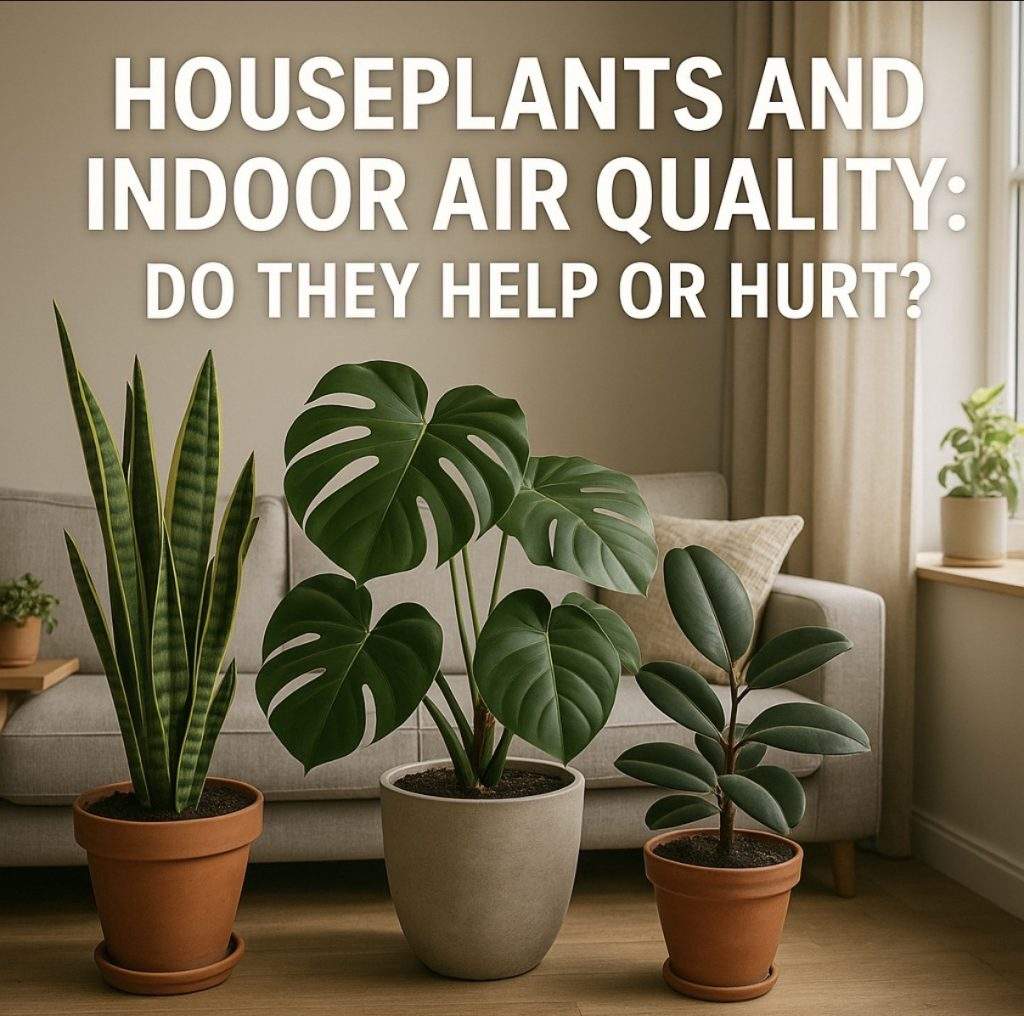
For decades, homeowners have filled their living rooms, bedrooms, kitchens, and offices with houseplants under the belief that plants naturally “clean the air.” While greenery certainly brightens a space and supports emotional wellness, many of the claims about air purification come from studies that don’t reflect real-life home or office conditions.
So what health values are plants providing?
THE NASA STUDY: GREAT SCIENCE, BUT NOT REALISTIC FOR HOMES
Much of the belief that houseplants remove toxins comes from NASA’s well-known 1989 study. The research did show that certain plants lowered VOCs (volatile organic compounds), but the testing was done in sealed chambers, not in rooms with air movement, HVAC systems, and normal ventilation.
Follow-up studies show that to achieve similar purification levels in real homes, you would need over 100 plants per room, far more than most households or offices contain.
This doesn’t mean houseplants aren’t useful, but it does mean they are not an effective air purifier on their own.
WHAT HOUSEPLANTS CAN IMPROVE
Even though plants do not significantly filter pollutants, they do offer legitimate indoor benefits:
- Stress reduction and improved mood
- Mild humidity boost during dry winter months
- Aesthetic appeal and emotional wellness
- Potential therapeutic value
HOW PLANTS CAN CONTRIBUTE TO MOLD & IAQ PROBLEMS
While houseplants can be beneficial, certain conditions can actually harm your indoor air quality, especially if moisture management isn’t ideal.
Common plant-related indoor air quality (IAQ) issues include:
- Overwatered soil leading to mold growth
- Excess humidity, especially in already-damp homes
- Fungus gnats and moisture-loving pests
- Mold behind plant stands, furniture, or shelving
- Standing water pooling in drip trays
BETTER WAYS TO IMPROVE INDOOR AIR QUALITY
Plants are great for ambiance and wellness, but they should support your IAQ strategy, not be the main solution. Consider:
- HEPA air purification
- Improved ventilation
- Humidity control (ideal 30–50%)
- Professional Indoor Air Quality testing
- Routine HVAC maintenance
FOR RESIDENTS WHO WORK AND LIVE IN PENNSYLVANIA & NEW JERSEY
Our region is especially vulnerable to IAQ issues due to:
- Closed windows and limited ventilation in winter
- Damp or unfinished basements
- High humidity in the spring and summer
- Older homes with restricted airflow
These conditions make IAQ challenges more likely, especially when plants are overwatered or grouped tightly together.
WORRIED YOUR PLANTS MAY BE IMPACTING YOUR AIR?
Karl Environmental provides comprehensive Indoor Air Quality Assessments to detect mold, humidity issues, ventilation problems, and hidden moisture concerns. We can help determine whether your plants are enhancing your environment or quietly contributing to air quality problems. Contact us today!
Share this article:


